 |
|
 |
|
 |
|
 |
|
 | |
 |
|
 | |
 |
|
 |
|
 |
|
 |
|
 |
|
 |
|
 |
|
 |
Instead, I tell them where I like to go.”–JW
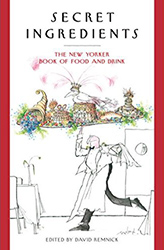 Secret Ingredients: The New Yorker Book of Food and Drink; by David Remnick (Editor); hardcover: 608 pages; Random House; 2007.
Since its earliest days, The New Yorker has been a tastemaker – literally. As the home of A. J. Liebling, Joseph Wechsberg, and M.F.K. Fisher, who practically invented American food writing, the magazine established a tradition that is carried forward today by irrepressible literary gastronomes, including Calvin Trillin, Bill Buford, Adam Gopnik, Jane Kramer, and Anthony Bourdain. Now, in this indispensable collection, The New Yorker dishes up a feast of delicious writing on food and drink, seasoned with a generous dash of cartoons…
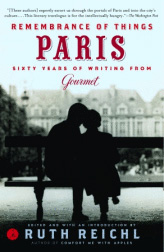 Remembrance of Things Paris: Sixty Years of Writing from Gourmet: by Gourmet Magazine Editors, Edited by Ruth Reichl; Modern Library; Trade Paperback; March 2005. Gourmet magazine has been delivering tasty reports on France’s restaurants and cuisine to Americans ever since the end of World War II. This anthology collects the magazine’s best essays, which document Paris’s transformation over the years, and includes descriptions of such momentous events as the demise of the market at Les Halles and the development of nouvelle cuisine. The selection is heavy on Joseph Wechsberg, a frequent contributor during the ’70s, and on Naomi Barry, the magazine’s first resident correspondent, but it also includes the work of Michael Lewis and Diane Johnson. The book covers everything from chocolate shops to legendary restaurants to instructions on how to make a perfect cassoulet. And it’s not just food writing-there are also pieces on haute couture, flower markets and Paris icon Alice B. Toklas, making this is a charming, nostalgic collection for francophiles of all stripes.
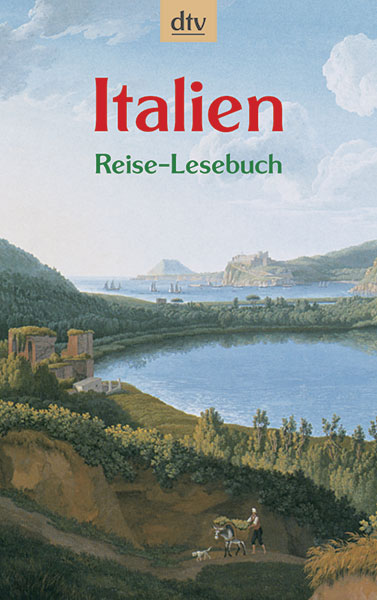 Italien/Reise-Lesebuch: von Stefan Janson; dtv; 2005. Kennst du das Land ...? Dahin, dahin - in das Land, wo nicht nur die Zitronen blühen, sondern auch exquisite Ravioli zubereitet werden, wo Meer und Sonne, Kunst und Abenteuer locken - entführt erneut dieses Lesebuch mit Texten berühmter Reisender.
Einmal mit Rilke in Florenz, mit Proust in Venedig oder mit Fontane in Oberitalien zu sein - das könnte auch für versierte Italienkenner Überraschungsmomente bieten.
Im Gegensatz zu üblichen Reiseführern lädt dieses Buch auf eine Spurensuche und Entdeckungsreise in mehrfachem Sinne ein. Denn der Lesende begegnet berühmten Orten und Landschaften in historischen Berichten und Momentaufnahmen, die zum Vergleich untereinander, zum Vergleich mit selbst Erlebtem und Erfahrenem, aber auch zum genießenden Nachvollzug in Phantasie und Wirklichkeit herausfordern: eine Italienreise durch Raum und Zeit - in Begleitung illustrer Reiseführer.
Contains an essay by Joseph Wechsberg: Auf der Hafenstraße roch es frisch und kräftig ... oder How to Eat in Genoa.
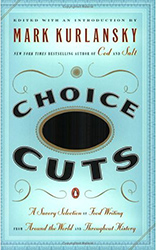 Choice Cuts – A savory selection of food writing from around the world and throughout history: by Mark Kurlansky; Penguin paperback; 2004.
  Endless Feasts: Sixty Years of Writing from Gourmet: by Gourmet Magazine Editors, Ruth Reichl (Editor); Modern Library; hardcover; 2002; paperback; 2003.
This is a fascinating compendium of Gourmet magazine food and travel pieces spanning six decades – a collection that mirrors our dining habits over the years but is timeless in its underlying theme: we are what we eat. The assembled cast is tops: James Beard on pasta; Elizabeth David lauding epicure Edouard de Pomaine; M.F.K. Fisher on her favorite Swiss inns; Paul Theroux writing about crossing the Rockies; Anita Loos evoking cocktail parties of the 1920s. Compiled by Gourmet editor-in-chief (and series editor) Ruth Reichl, and with recipes from the contributors’ pieces--including hobotee, North Carolina’s famed meat custard, and Katherine Hepburn’s brownies--the book will delight armchair and meal-chasing foodies alike. Most readers will discover new voices among the more familiar. Present, as noted, is M.F.K. Fisher, offering one of her most splendid sun-and-shadow portraits,
 but there’s also the underread (and magnificently dry) Ruth Harkness providing glimpses of a World War II winter spent in a crumbling Tibetan Lamasery, where she devoured $10,000 worth of rare pheasants; the drolly avuncular Joseph Wechsburg on Austria’s legendary patisserie, Demel’s (“the loudest sound you hear there is the breaking of crisp strudel dough”); crusty Maine poet Robert P. Coffin on Down East breakfasts and lobstering (“a night like a night of marriage”); and the reportorial, unblinking Jay Jacobs on Beard himself (“the man remembers in minute detail every one of the eighty-seven-thousand-odd meals he has eaten since his birth”). The quality of the essays varies, of course, but the book overwhelmingly gladdens in its rich breadth of time and place and evocative storytelling.
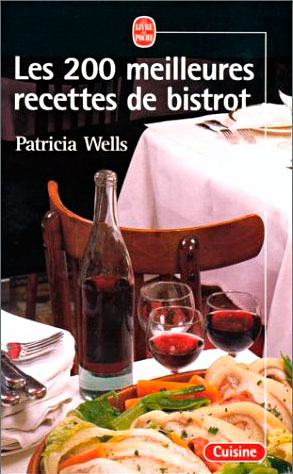
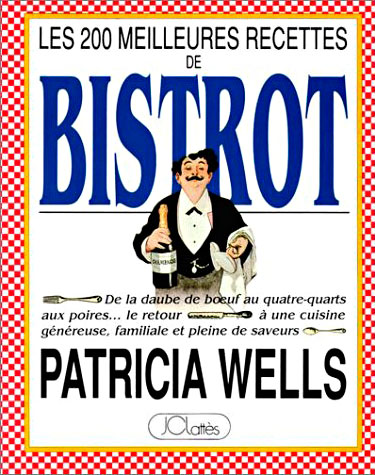 Les 200 Meilleures Recettes de Bistrot: Patricia Wells; JC Lattès, 1991.
–LGF-Livre de Poche, 1993.
Joseph Wechsberg is mentioned inside.
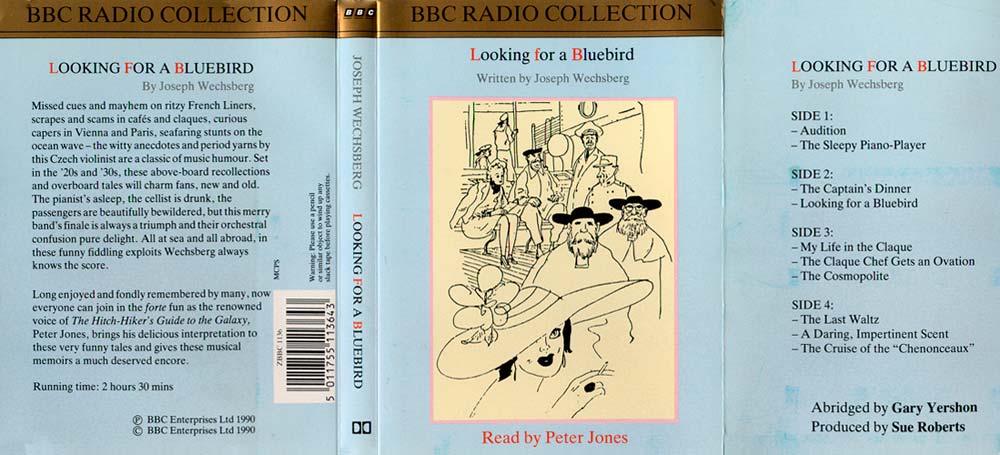 Looking for a Bluebird: Joseph Wechsberg; BBC Enterprises, Ltd., 1990; audiobook, read by Peter Jones; cassette.
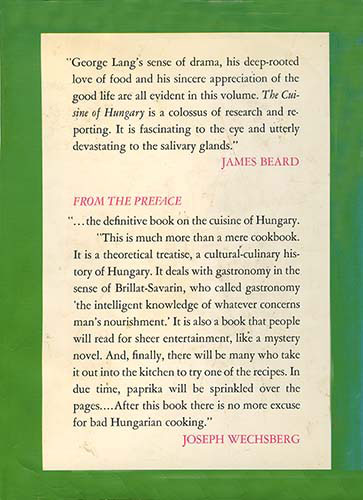
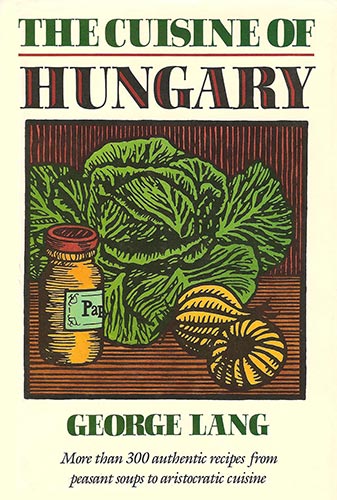
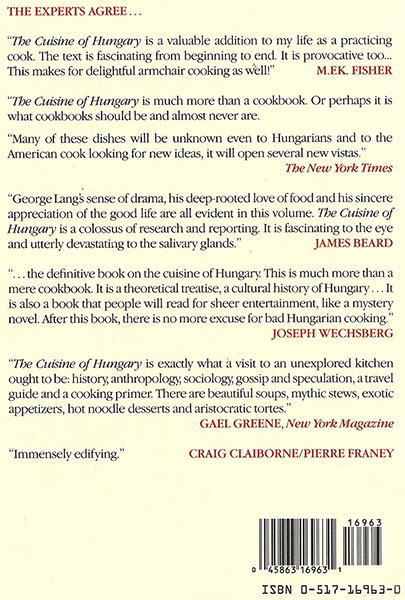
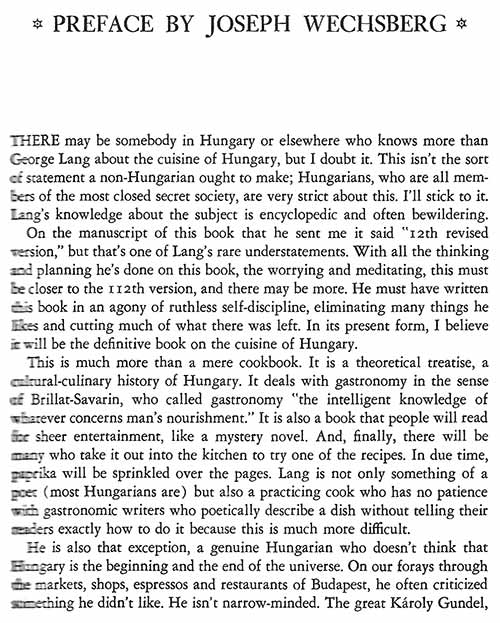
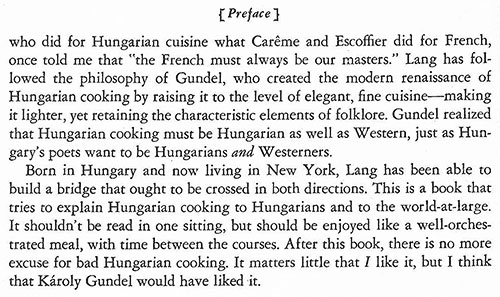
 The Cuisine of Hungary: George Lang; Joseph Wechsberg (preface), Atheneum, 1971; & New York, 1990; hardcover; & Penguin Books Ltd.; 1993; paperback.
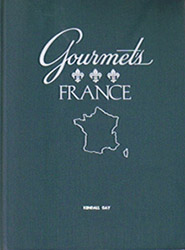 Gourmet’s France: Jane Montant, editor. Photographs by Ronny Jaques; Illustrations by Mario Micossi; Hardcover; Gourmet Books Inc.; 1982. Essays by Joseph Wechsberg: Lyonnais and Bordeaux.
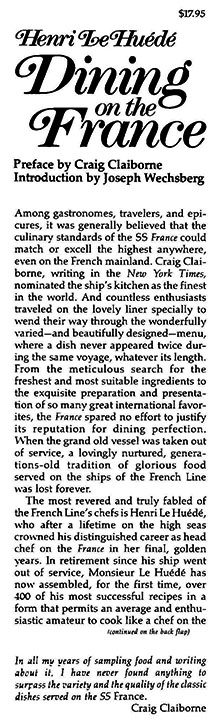
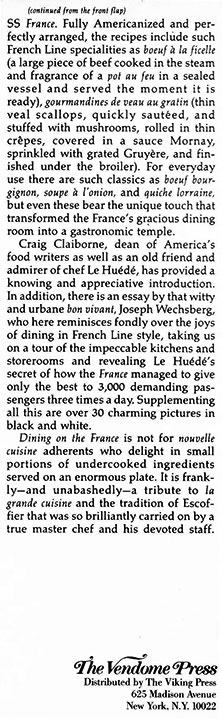
 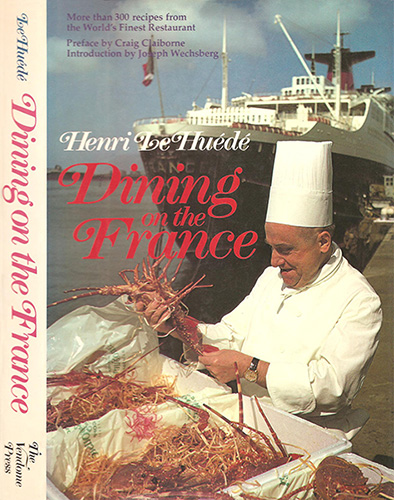 Dining on the France: More than 300 recipes from the World’s Finest Restaurant: Henri Le Huédé; Vendome NY, 1981. Preface by Craig Claiborne, introduction by Joseph Wechsberg.
254 pages, index, many illustrations. Several pages of black and white photographs. Culinary stories and recipes from the luxury ocean liner, SS France.
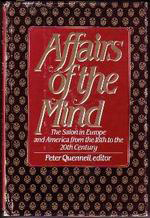 Genius in the Drawing-Room: the Literary Salon in the Nineteenth and Twentieth Centuries; Peter Quennell (Ed); Weidenfeld and Nicolson; 1980; (pictured) Affairs of the Mind: Salon in Europe and America from the 19th to the 20th Century; Simon & Schuster (March 1980). Hardback, 188 pages, illustrated with b/w plates. Contains an essay entitled Karel Čapek, by Joseph Wechsberg. Victoria Glendinning, Peter Quennell, Harold Acton, Joanna Richardson, and others recreate the drama and personalities connected with great European and American salons.
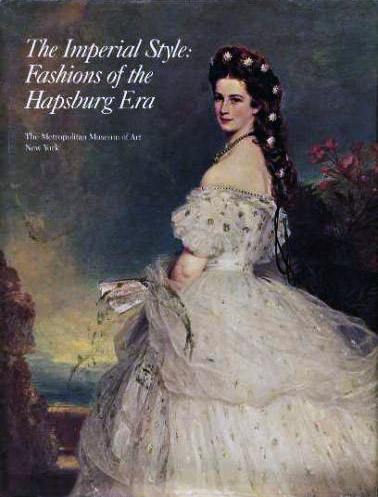 The Imperial Style: Fashions of the Hapsburg Era; based on the Exhibition, Fashions of the Hapsburg Era, Austria-Hungary, at the Metropolitan Museum of Art, December 1979-August 1980: Polly Cone; Metropolitan Museum of Art (New York, N.Y.), 1980.
Many b&w and color illustrations and photographs. Covers the fashions worn in the Hapsburg Empire in the area of Austria-Hungary.
 The French Collection, from Playboy; Playboy Press; Chicago IL,1975. Opinion article The French Myth, p. 40, by Joseph Wechsberg.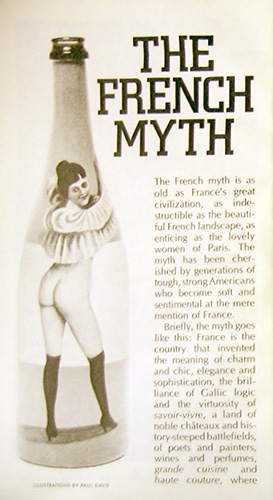
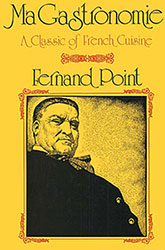 Ma Gastronomie: by Fernand Point; Translated and Adapted By Frank Kulla and Patricia Shannon Kulla; Introd. By Joseph Wechsberg; Special Drawings By Andre Dunoyer De Segonzac; Lyceum Books, Wilton, Conn.;
  1974; hardcover.
(Roll your mouse over the image to the right for the back cover.)
 The Murderers Among Us (The Simon Wiesenthal Memoirs): Simon Wiesenthal; Joseph Wechsberg (Ed.), 1967; McGraw-Hill Book Company, hardcover.

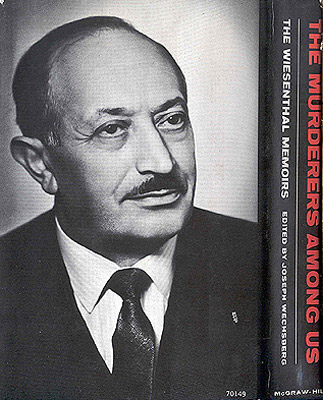



The Murderers Among Us (Simon Wiesenthal): Simon Wiesenthal; Joseph Wechsberg (Ed.), 1968; Pan Books Ltd., paperback.
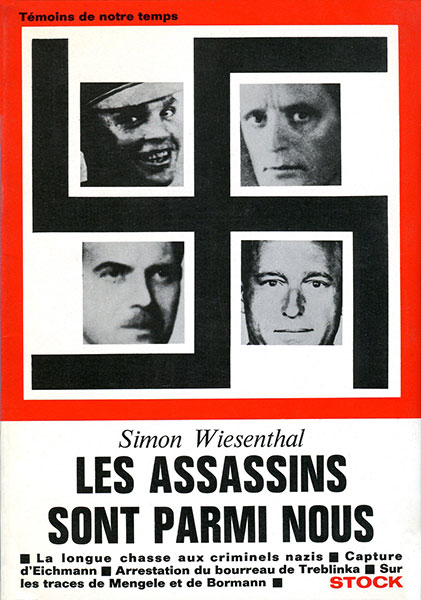 Les Assassins Sont Parmi Nous: Simon Wiesenthal, French translation with an introductory portrait of the author by Joseph Wechsberg, 1967; Stock.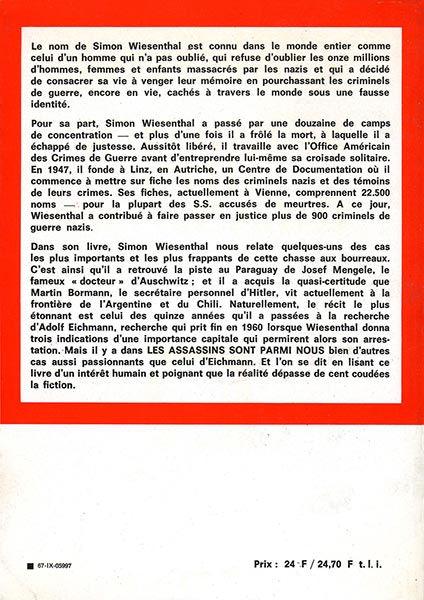
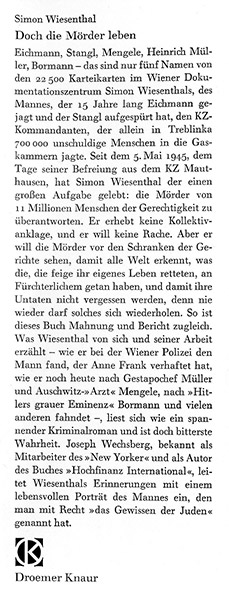
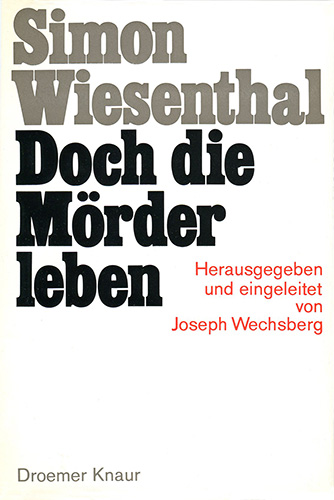 Doch di Mörder leben: Simon Wiesenthal, with an introductory portrait of the author by Joseph Wechsberg, Droemerschew Verlagsanstalt Th. Knaur Nachf., München/Zürich, 1967.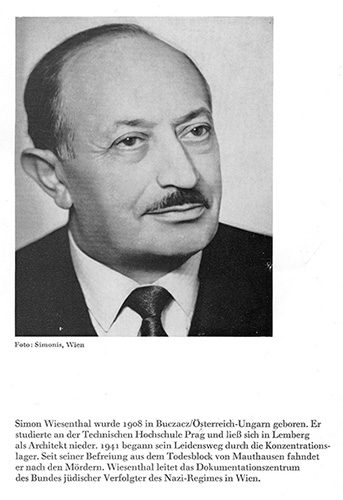
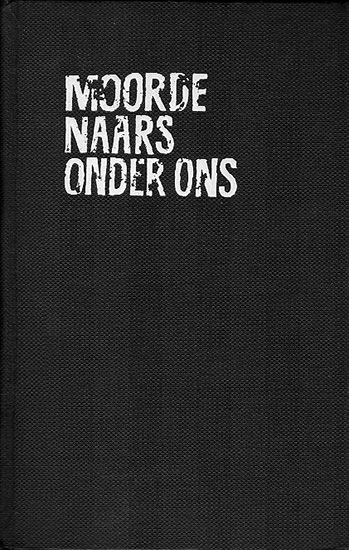 Moordenaars onder ons. Uit de dossiers van Simon Wiesenthal: Simon Wiesanthal; (bewerkt door Joseph Wechsberg); Elsevier, Amsterdam, 368 pp.; 1967
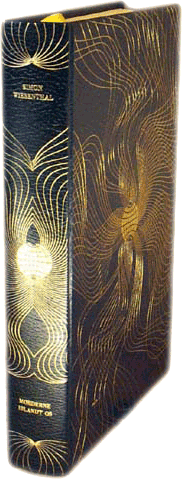 Morderne iblandt os: Simon Wiesenthal, Redaktion og introduktion af Josef Wechsberg; Branner og Korch/Winters Forlag, København; 1967/8/9.
+Mordere iblandt os (1967)—Danish television special about Simon Wiesenthal, a survivor of the Holocaust. Simon Wiesenthal (Denmark promotional title); Runtime: 22 min.
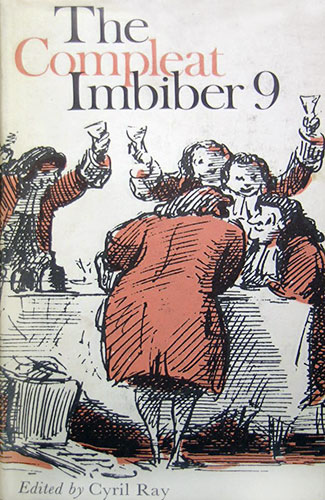 The Compleat Imbiber 9, An Entertainment: edited by Cyril Ray; designed by Charles Hasler; article by Joseph Wechsberg – The Greatest Living Chef – tribute to Alexandre Dumaine; 1967; London, Fakenham, Reading, Cox & Wyman Limited/Collins.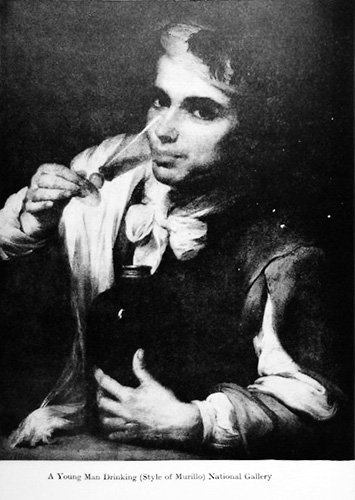
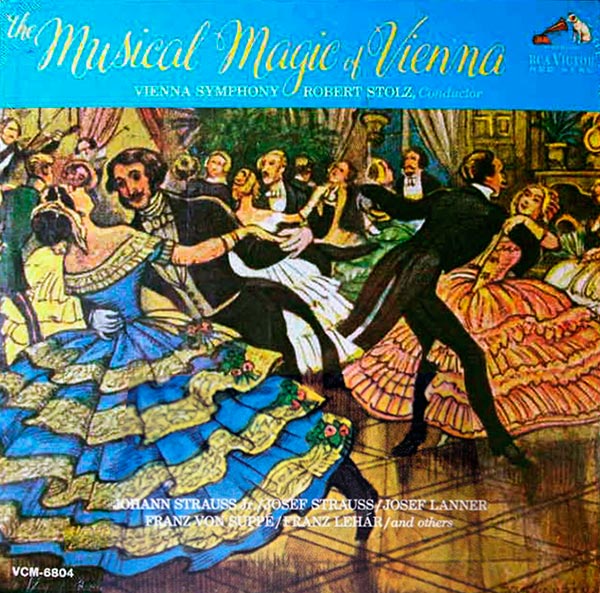 The Musical Magic of Vienna Symphony Stolz VCM 6 Record Set; The Vienna Symphony Orchestra – Robert Stolz, conductor. Made in USA, 1967; Johann Strauss Jr., Johann Strauss Sr., and others. Enclosed: Essay by Joseph Wechsberg on the waltz capital and its composers.
 Great Rivers of Europe: Introduction by Alan Bullock; Weidenfeld and Nicolson, 1966; “Time-Life International Book Society” slipcase. Contents: The Danube by Basil Davidson; The Elbe by Joseph Wechsberg; The Loire by Freda White; The Po by H.V. Morton; The Rhine by Christopher Sykes; The Seine by James Campbell; The Tagus by Thomas Hinde; The Thames by Nigel Nicolson; The Tiber by Georgina Mason; The Volga by Lionel and Miriam Kochan.
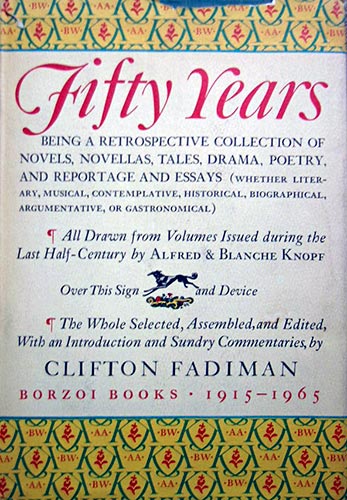 “The Formidable Ferdinand Point,” by Joseph Wechsberg in Fifty years; being a retrospective collection of novels, novellas, tales, drama, poetry, and reportage and essays …, by Clifton Fadiman, Alfred A. Knopf, Inc:, 1965.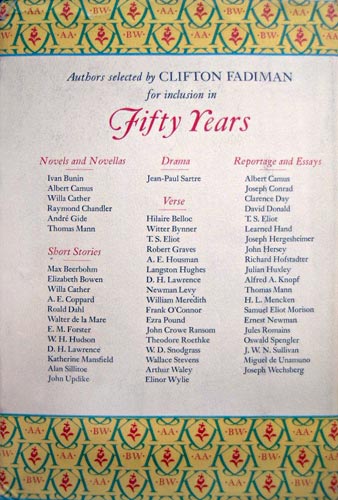
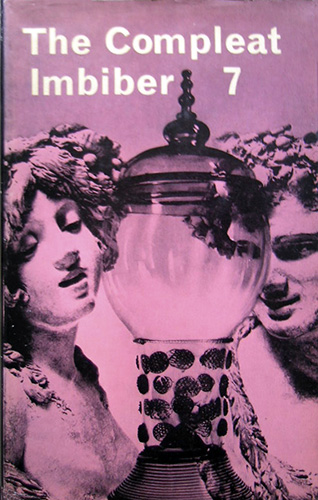 The Compleat Imbiber 7, An Entertainment: edited by Cyril Ray; designed by Charles Hasler; article by Joseph Wechsberg – The Epicurean Diet; 1964; London, John Harvey & Sons, Ltd./Studio Vista Limited.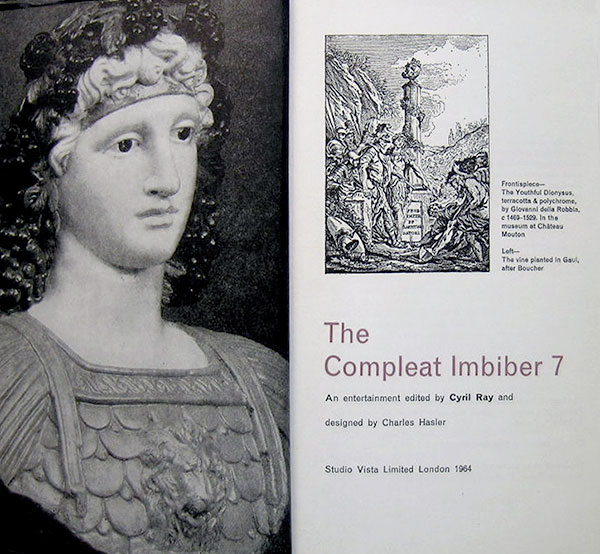
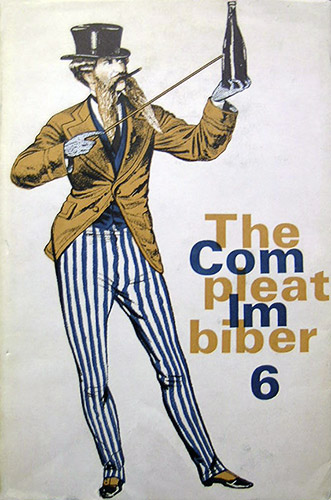
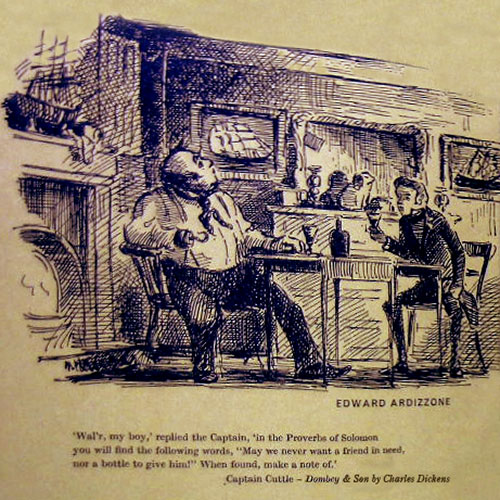 The Compleat Imbiber 6, An Entertainment: edited by Cyril Ray; designed by Charles Hasler; article by Joseph Wechsberg – Vienna Love Story; 1963; London, John Harvey & Sons, Ltd./Vista Books.
‘An entertainment’ is how the editor, Cyril Ray, modestly describes this now firmly-established annual anthology of verse, prose and pictures, fact, fiction and fantasy-dedicated by Harveys of Bristol, its sponsors, to all who love not only good wine but good living.
Number 6 of the Comp/eat Imbiber includes more famous writers than ever, some of them in nostalgic mood, for Evelyn Waugh recalls his first faltering steps as a wine-bibber, and Katharine Whitehorn hers as an embryo cook, while Anthony Powell remembers cracking a bottle at the old Cavendish Hotel with the legendary Rosa Lewis, and Wynford Vaughan-Thomas lives over again some of his more hilarious and less hazardous adventures as a war correspondent. But there are journeys in space as well as in time: Raymond Postgate visits the vineyards of Switzerland and J. B. and Jacquetta Priestley those of Soviet Georgia, along with its dark-eyed, lighthearted people. Joseph Wechsberg of the New Yorker tells of his love-affair with a Viennese pastrycook’s-but what a pastrycook’s!-and Ronald Bryden is enchantingly evocative about how rum reflects the respective cultures of three West Indian islands.
As always, there are verses in the Compleat Imbiber, grave and gay; short stories, this year by Olivia Manning and Julian Mitchell; and there is the annual piece of advice on what wines to buy in the year to come, for current drinking and for safe investment-an article that in past years has shown wise buyers a good profit. And as before the book is most handsomely designed by Charles Hasler. In 1962, admiring Frenchmen made Cyril Ray, the editor of the Compleat Imbiber, a Commandeur d’Honneur of the Bontemps du Medoc and a peer of the Jurade de St. Émilion for his services to wine.
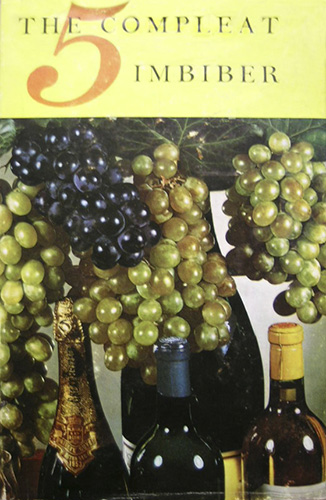 The Compleat Imbiber 5, An Entertainment: edited by Cyril Ray; designed by Charles Hasler; article by Joseph Wechsberg – Where Everyone’s a Herr Doktor; 1962; London, Vista Books.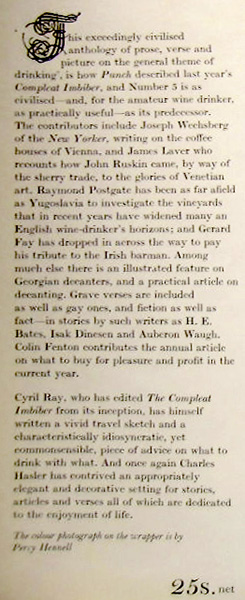
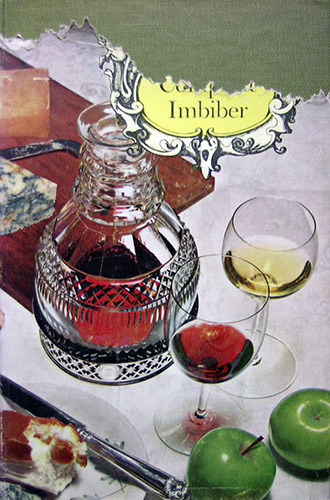 The Compleat Imbiber 4, An Entertainment: edited by Cyril Ray; designed by Charles Hasler; article by Joseph Wechsberg – The Singing Waiter; London, 1961; Vista Books.
The first Compleat Imbiber, commissioned by W. & A. Gilbey Ltd., Distillers and Wine Shippers, and edited by Cyril Ray, appreared in 1957, in time for, and as a part of, Gilbey’s Centenary celebrations. Its success was such that further volumes (published by Putnam) appeared in 1958 and 1960. This fourth Compleat Imbiber, although under a new publishers imprint, is also sponsored by Gilbeys and edited by Cyril Ray and it is planned that this anthology should be published annually in the future.
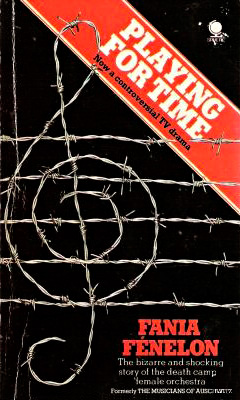 Playing for Time: Fania Fénelon, 1960, paperback; introduction by Joseph Wechsberg. In 1943, Fania Fénelon was a Paris cabaret singer, a secret member of the Resistance, and a Jew. Captured by the Nazis, she was sent to Auschwitz where she became one of the legendary “orchestra girls” who used music to survive the Holocaust. Playing for Time is her personal account of that incredible experience.
 It is one of the most powerful – and true – stories of our time.
-Mass Market; Berkley, 1979, paperback.
-Syracuse University Press, December 1997, paperback.
-Atheneum Publishers, NY, 1977, hardcover.
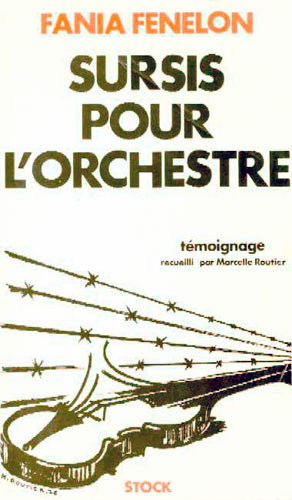
 -Sursis pour l’orchestre; Stock/Opéra Mundi, 1976. Témoignage recueilli par Marcelle Routier; & France Loisirs, 1982.
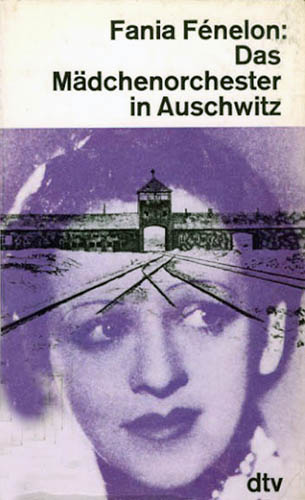
-Das Mädchenorchester in Auschwitz, Aus dem Französischen von Sigi Loritz; Deutscher Taschenbuch Verlag, München, 1991, paperback.
 Holiday Magazine Book of the World’s Fine Food; Simon & Schuster, 1960.
The following is from the front and back flaps of the cover:
Holiday Magazine Book of The World’s Fine Food is your invitation to the incomparable pleasures of the palate. Of all the luxuries of life, the enjoyment of fine food and drink is the most lasting, the most often repeated.
This book is a unique excursion into the magic domain of gastronomy – a guided tour conducted by experts who are equally adapt with pen and fork. You have before you at this moment a lifetime feast of fine talk about fine food.
This treasure is the perfect complement to your basic household cookbook. For here, in addition to the sparkling articles and glowing color photographs, are nearly three hundred specific and detailed recipes--recipes that will delight the most fastidious epicure.
Here too is a handbook of gourmet dining in America and Europe. Winners of the coveted Holiday Restaurant Awards in the United States are named, together with a list of the fine restaurants of Europe chosen by the editors. A dozen articles – a dozen exciting visits to the world’s greatest temples of gastronomy: the Pavillon, Galatoire’s, the posh places of San Francisco, the world famous restaurants and the hidden bistros of France – make THE WORLD’S FINE FOOD your guide to reliving old pleasures and planning new ones.
When Holiday Magazine began publication it took the whole world as its province. Holiday editor, Ted Patrick, writes in the Introduction to this volume, “Food is a determining factor in where to go, where to stop. Food is a determinant in the enjoyment of any place or any carrier. Food can play an important part in making life dull or exciting.” Holiday has been tirelessly compiling the vital statistics on where (in the physical world) and how (in the realm of gastronomy) you can most enjoy your travels. Fireside traveler or true world explorer, you will delight in the company of:
Clifton Fadiman discussing the fine arts of making and eating cheese;
Silas Spitzer writing of bread and of man’s history-long hunger for it;
Lucius Beebe making a fabulous gourmet tour of the famous restaurants of San Francisco;
Frank Schoonmaker ticking off native delights in a Handbook of American Wines;
Joseph Wechsberg sighing over that mouthwatering mystery, the truffle;
Eric Newby threading his way through the intricacies of British beer and others equally exciting.
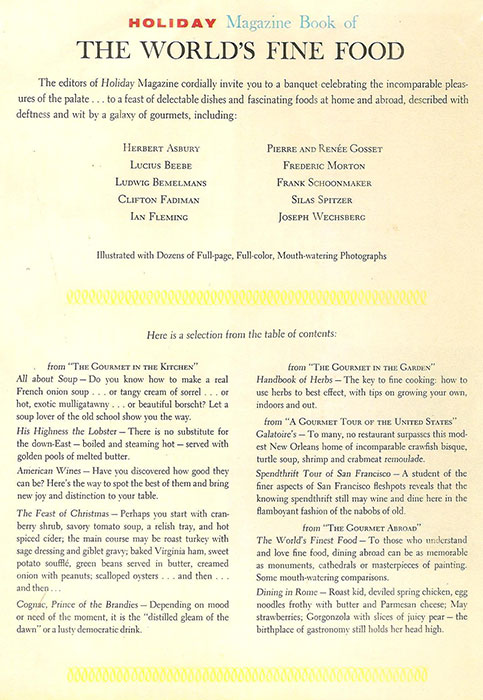 Surely you have already noticed the dozens of full-page photographs which enhance your pleasure in this book. Considered to be the finest food pictures published in America, they are reproduced in full size and full color as they appeared in Holiday.
Here, for the price of a dinner and a good bottle of wine, is a lavishly handsome book by distinguished gourmets writing of their favorite arts and pleasures of the table. It is a valuable possession for you who appreciate the finest in food. A challenge in your kitchen, it will be a lifetime treasure in living room, guest room and library.
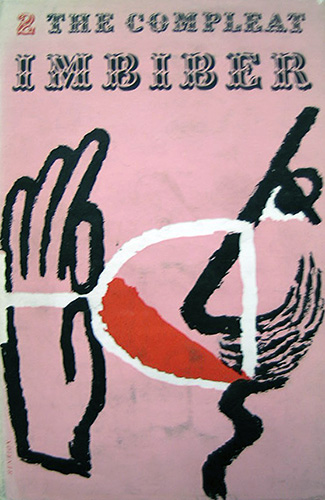 The Compleat Imbiber 2, An Entertainment: edited by Cyril Ray; designed by F.H.K. Henrion; article by Joseph Wechsberg – Confessions of a Bootleger; 1958; Jarrold & Sons, Ltd./Putnam & Co. Ltd., UK.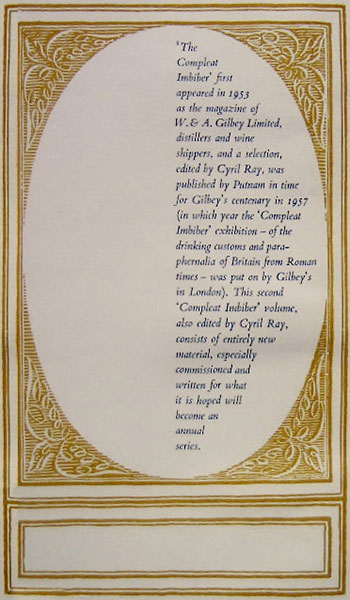
 Holiday In France: edited by Ludwig Bemelmans; Houghton Mifflin Company, Boston; First Edition, 1957. Wonderful collection of pieces by many hands – including Colette, Bemelmans, Paul Bowles, Buchwald, Wechsberg, Steinbeck, Irwin Shaw, Steegmuller, Perelman, Capa and others, with line-illustrations by Bemelmans. A delight for those who love Paris.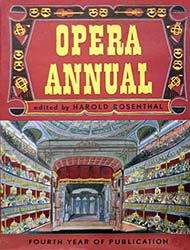
 Opera Annual, 4th Year of Publication: edited by Harold Rosenthal, with an Introduction by the Earl of Harewood; John Colder (Publishers) Limited, London; First Edition, 1954.
II. OPERA IN EUROPE [excerpt from 1st edition]
The Vienna Opera Festival Joseph Wechsberg . . . . . . p. 82
“FESTIVAL” is becoming a much misused word. A festival should be made up of festive performances, carried in a festive spirit. It is not sufficient to lure visitors by promises of great things to come and then offer them sub-standard repertory. Perhaps we in Vienna were spoiled by the Festwochen in 1952 and 1953, when the Staatsoper im Theater an der Wien gave a brilliant galaxy of fine opera performances during the annual June Festival. This year, the Festwochen opened and closed with spectacular events; in between were stretches of arid mediocrity. There seemed to be a general lack of organization. It is bad luck when a number of first-rate singers are suddenly getting indisposed; it is poor management when a Festival is organized without adequate replacements. On two successive evenings the performances had to be changed at the last minute. On other nights, there was appalling improvisation. The old era Hilbert is finished and the new era Bohm (who takes over as director in September) had not yet started. During the interregnum no one seemed to care what happened. The present director,
Franz Salmhofer, was overheard saying that ‘improvisation is everything.’ Visitors from abroad, who had travelled to Vienna expecting to hear great things, sat in dismay, bored by voiceless singing, superannuated acting, sloppy orchestra playing and a virtual lack of musical direction. No opera-house is better than its conductors and some of the State Opera’s present conductors just do not belong there.
There were two outstanding performances in twenty-two days. Both were conducted by Dr. Karl Bohm. This is no accident. Things being what they are now in Vienna only the future director, who can hire and fire, seems able to extract that extra effort from the performers which makes the difference between a mediocre performance and a great one.
The two outstanding performances were Meistersinger and Elektra. Paul Schoeffler sang a Hans Sachs of great poetic beauty, with the necessary humorous and robust undertones. Rarely have veteran Meistersinger fans, to whom I belong, heard the tragic of the ageing man (Mein Kind, von Tristan und Isolde kenn ich ein traurig Lied) with such eloquent understanding. The liedermonolog and the scene with Eva (Irmgard Seefried) were magnificent, and so was the entire Schusterstube. The quintet reminded me of the great days of Lotte Lehmann, Leo Slezak and Emil Schipper. Kunz was the Beckmesser (he refrained from exaggeration) and Murray Dickie and Rosette Anday were their reliable selves. The Mastersingers could be heard, the Prugelszme was a cabinet piece of exactness, and the Festzviese was impressive. What an evening that was!
Elektra is the single greatest performance in Vienna, and the one during the Festival was even more gripping and moving than usualy. Bohm kept the large orchestra down to chamber-musical lucidity and there were minutes of unbroken lyrical beauty, such as Elektra’s meeting with Orest and the final duet of the two sisters. In the title part Christel Goltz made it clear once again that she is the finest Elektra of our day; one would wish though she would not sing this taxing part so much, for there were signs of fatigue, particularly her around B and B flat; her Cs are magnificent. The rest of the cast, Elisabeth Hoengen as Klytemnestra, Hilde Zadek as Chrysothemis, Schoeffler as Orest and Max Lorenz as Aegisth, were equally spectacular. The orchestra, under Bohm, was marvellous.
There were also a few good evenings. A Don Giovanni with George London, vocally and in appearance superb, though in his characterization sometimes conventional, and with a trio of beautiful women, Zadek as Donna Anna, Lisa della Casa as Elvira, Hilde Gueden as Zerlina. Ludwig Weber as the Commandator sang the cemetery scene with impressive resonance. There was also an exciting Tristan with the great Martha Modi and Max Lorenz. Both performances (as well as a fine Ariadne) were conducted by Rudolf Moralt, the State Opera’s always-reliable maestro, a fine technician and a man of sound musical intelligence. There are rumours that he may not stay on in Vienna. It is to be hoped that Bohm will not repeat the mistake of some of Ms predecessors who surrounded themselves with a string of second-rate conductors so they would shine themselves. This may be quite effective for the Herr Direktor who conducts all outstanding performances, but it is not the right way to keep a high-class establishment.
In Ariadne, Seefried demonstrated again that her Komponist is perhaps the finest of her parts, and the long legato phrases are so-to-speak tailor-made for Zadek’s beautiful, warm voice. Richard Strauss’s ninetieth birthday was celebrated with a good performance of Daphne (with Maria Reining). As Boris Godunov, George London, singing beautifully, was surrounded by a hopeless cast and hardly helped by a sloppy orchestra.
By way of contributing to the new Handel Renaissance, the State Opera produced Julius Caesar. No expense was saved. Impressive baroque scenery and costumes were designed by Caspar Neher. A selected orchestra (two first desk concertmasters, Boskowsky and Sedlak) was under Bohm. And there was a first-class cast (Shoeffler, Seefried, Hoengen, Dermota, Frick). The performance was very good, in spite of several indispositions. It was repeated just once, and it will not be given again before next year. A very fine contribution to kultura but one wonders whether the work couldn’t have been given as oratorio in the concert hall last year, Die Frau ohne Schatten was performed there while the money could have been spent to bolster the repertory, say, to buy new sets for the such much-performed productions as Carmen, or Hoffman’s Erzdhlungen, which need badly a new make-up. Very little Mozart was given this year. The State Opera travels with its de-luxe Coslfan tutte, but at home they never play it. And Alban Berg’s Wozzeck, an opera in the repertory, was not performed during the Festival which was said to be devoted partly to Berg.
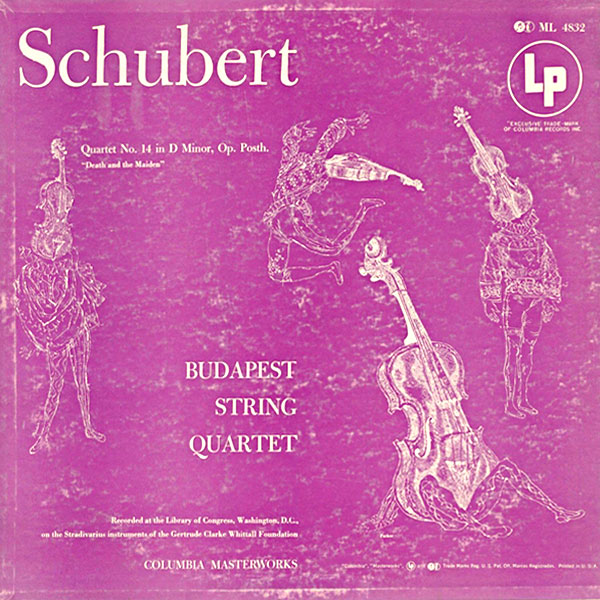
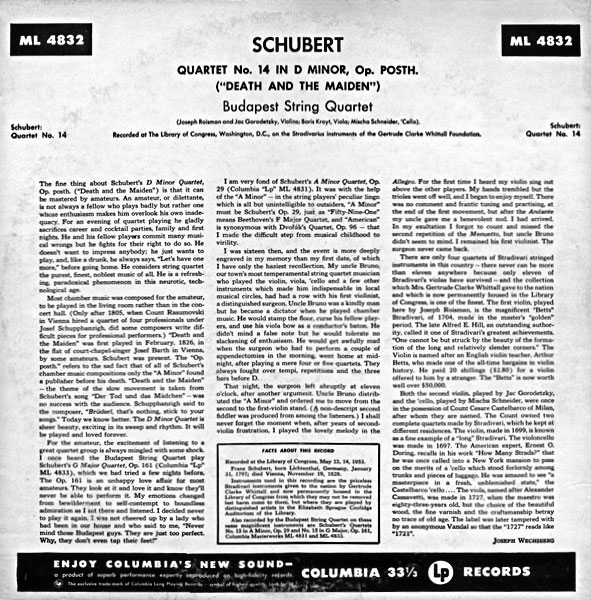 Quartet no. 14, in D minor, op. Post. “Death and the Maiden”, by Franz Schubert; performed by the Budapest String Quartet. Columbia masterworks sound recording. Program notes by Joseph Wechsberg on back cover. Recorded at the Library of Congress on the Stradivarius instruments of the Gertrude Clarke Whittall Foundation, May 13th-14th, 1953.
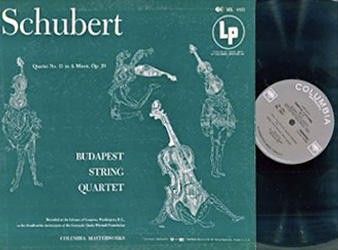 Quartet no. 13, in A minor, op. 29, by Franz Schubert; performed by the Budapest String Quartet. Columbia masterworks sound recording. Program notes by Joseph Wechsberg on back cover. Recorded at the Library of Congress on the Stradivarius instruments of the Gertrude Clarke Whittall Foundation, May 19, 1953.
© 2008-17 – Poppy Wechsberg/www.josephwechsberg.com – All rights reserved.